By 1812Blockhouse
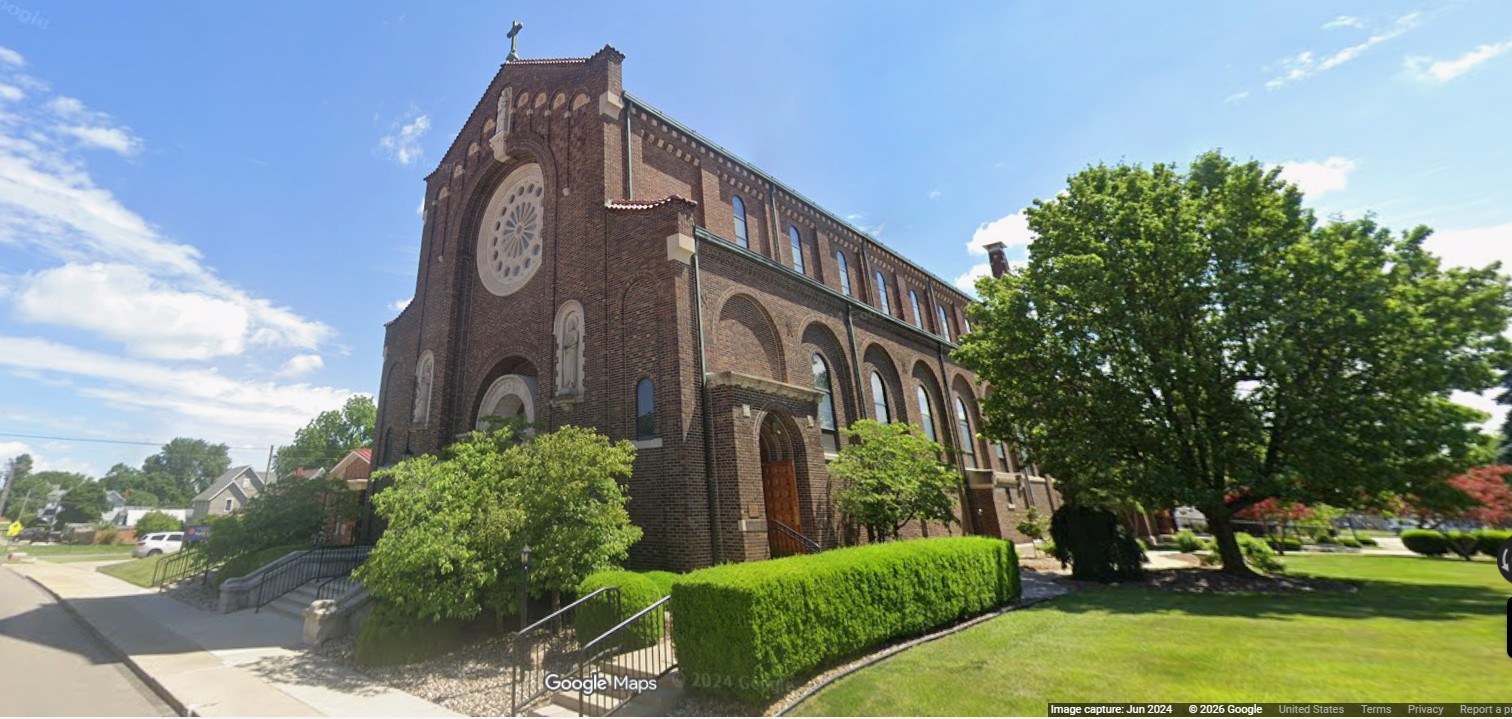
It is apparent that the architect of the Most Pure Heart of Mary Catholic Church in Shelby took particular pride in this building.
After all, while the church was being built in the decade before the Great Depression, Toledo architect William R. Dowling actually moved his family to Shelby, living at 216 West Main Street for two to three years.
The history of Catholicism in Shelby begins with efforts in the 1840s to establish a worshiping congregation. The first frame church building was completed in 1866, followed in 1890 by a brick church. By the early 1920s, the then-Bishop of Toledo, Samuel Stritch, decided that the parish deserved a larger, permanent home for worship. Stritch would go on to become Archbishop of Chicago and was made a Cardinal of the church in 1946.
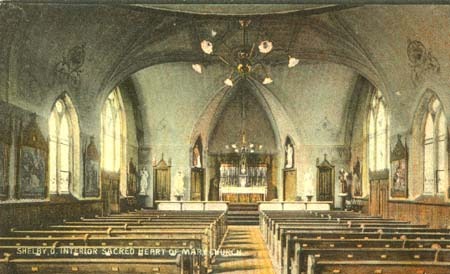
Ground was broken for the new church on July 22, 1924, and the cornerstone was laid on October 12 of that year by Bishop Stritch before several thousand people.
Constructed in basilica form and designed in the Romanesque style of architecture, the church was finished in 1928. Architect Dowling was a prolific designer of parochial buildings in northwest Ohio, including Catholic church buildings in Tiffin, Archbold, Toledo, Marblehead, and other communities. The exterior features outstanding decorative brickwork and stone trim, particularly on the facade and around the windows.
One focal element of the design is the apse which is separated from the nave by a large arched opening and carved marble altar rail.
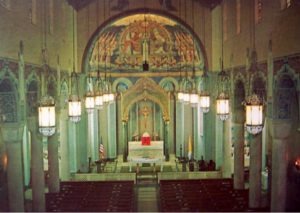
Beautiful interior murals were completed by German artist Gerhard Lamers and his children. Lamers studied at the Munich Art Academy and started his own art school in Muenster. Works by Lamers are in many churches, including at the Pontifical College Josephinum in Columbus. The art of Gerhard Lamers is becoming better known, as evidenced in this article “The Forgotten Art of Gerhard Lamers.”
The Most Pure Heart of Mary Catholic Church was placed on the National Register of Historic Places in 1978.
Sources: Wikipedia, Mansfield News, Most Pure Heart of Mary Church website – Photo: Creative Commons License; Google Maps/copyright in image


