By 1812Blockhouse
Ontario is preparing to welcome one of its most significant industrial projects in years. Charter Next Generation plans to build a 456,000-square-foot warehouse and industrial facility on a 25-acre portion of the former General Motors property along West Fourth Street, adding new momentum to a site that has slowly been reshaped from its auto-manufacturing past.
A Property Still Finding Its Next Identity
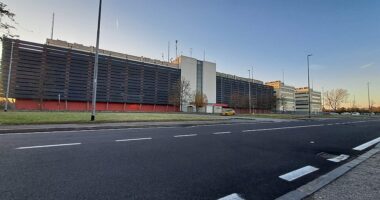
The old GM plant once dominated the city’s economic landscape. When production ended, the loss left behind both a vast physical footprint and a long list of questions about the future. Industrial Commercial Properties stepped in as the redeveloper, acquiring the overall site and working to fill it with a mix of tenants, light industrial uses, and new buildings.
This latest project is the most substantial construction on the grounds since GM left. It sends a clear signal that companies with regional roots see opportunities here, and that Ontario’s industrial corridor is aligning with modern manufacturing trends instead of trying to recreate what came before.
What the Project Will Deliver
The planned building is designed to be adaptable, able to function as a logistics hub, warehousing center, or a hybrid industrial space. CNG’s involvement makes sense given its ongoing expansion in north central Ohio. The company has invested in nearby Lexington and other locations in recent years, adding capacity for specialty film and packaging production. A development of this size will support that growth, both by consolidating operations and by preparing for future production demands.
Local authorities have played a notable role. The Richland County Port Authority approved revenue bond financing that helps reduce up-front costs for site work and construction. The city and county have coordinated with ICP on infrastructure planning, since the area’s electrical capacity and utility layout need to evolve to support this scale of development.
Construction is expected to extend through 2026, with site preparation and early work ramping up in the coming months.
Part of a Larger Regional Story
The CNG project is not happening in isolation. It fits into a broader pattern of industrial and logistics investment stretching across Richland, Crawford, and neighboring counties. Companies are looking for sites with highway access, redevelopment potential, and a workforce large enough to support sustained growth. Ontario sits at the crossroads of those factors.
The region’s economic base has been gradually shifting toward flexible manufacturing, advanced materials, and distribution. Projects like this sharpen that transition. They also show that communities with former heavy-industry sites can reshape their futures if redevelopment partners, regional economic groups, and private companies pull in the same direction.
What It Means for Ontario
For residents, the project brings a mix of practical impacts and long-term promise. It adds life to a part of the city that has been waiting for its next act. It strengthens relationships between Ontario and major employers with expanding needs. And it helps move the former GM site beyond its long period of uncertainty.
While the final job numbers for the new building have not been announced, CNG’s recent expansions elsewhere in the region suggest additional hiring is likely. That will bring secondary benefits for local businesses, training programs, and neighboring communities tied into the same labor market.
There are still details to watch. Large industrial projects often move in phases, and the timeline for full occupancy depends on infrastructure readiness and CNG’s production schedule. Even so, the direction is clear. Ontario is adding one of the region’s most visible new industrial facilities, anchoring a redevelopment effort that has taken years to reach this point.
Image by THAM YUAN YUAN from Pixabay