By 1812Blockhouse
Public health is often invisible when it’s working well. It’s the quiet inspection, the routine visit, the prevention that never makes headlines. But step back and look at a full year, and a different picture emerges—one of scale, reach, and steady presence across an entire community.
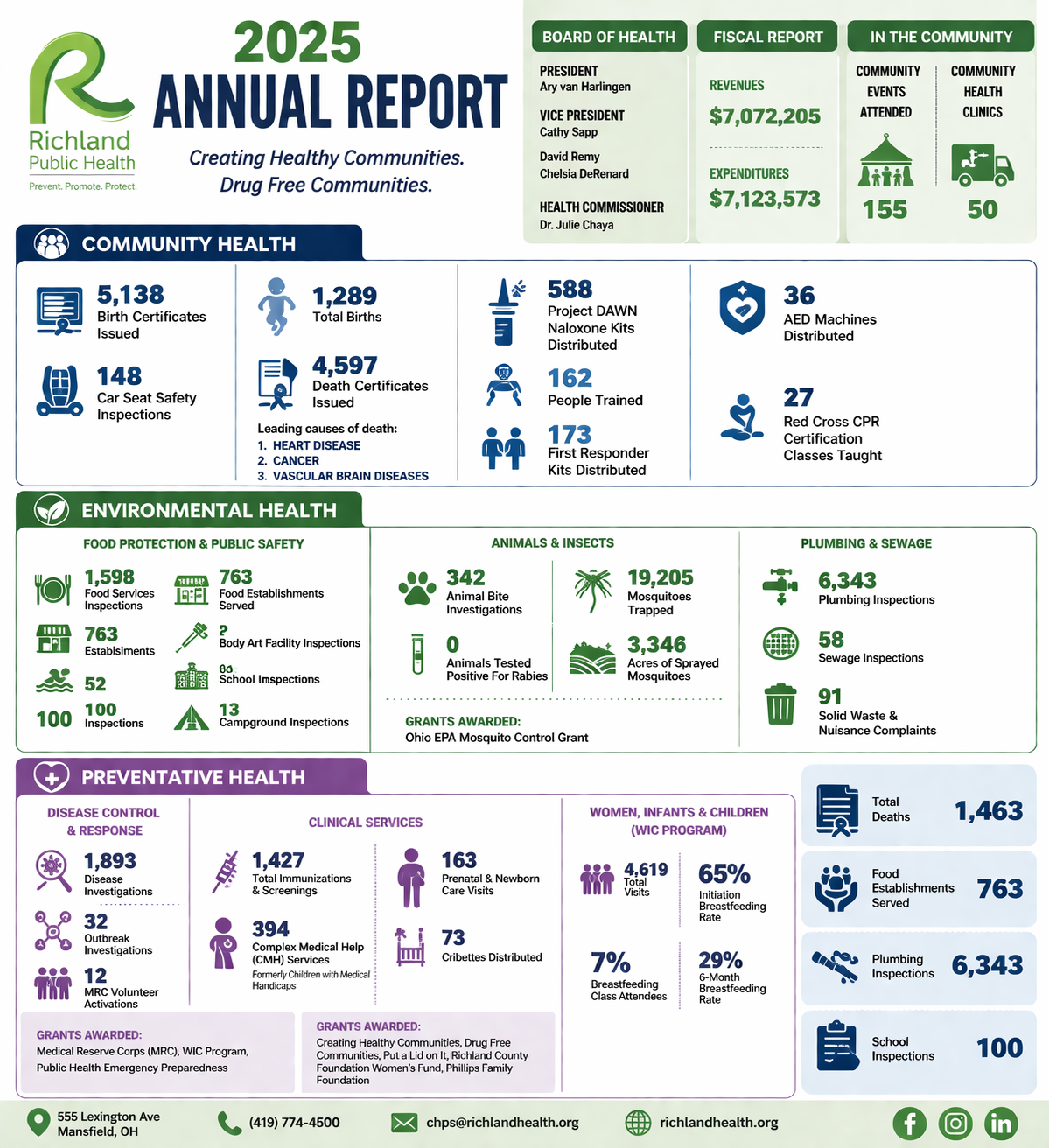
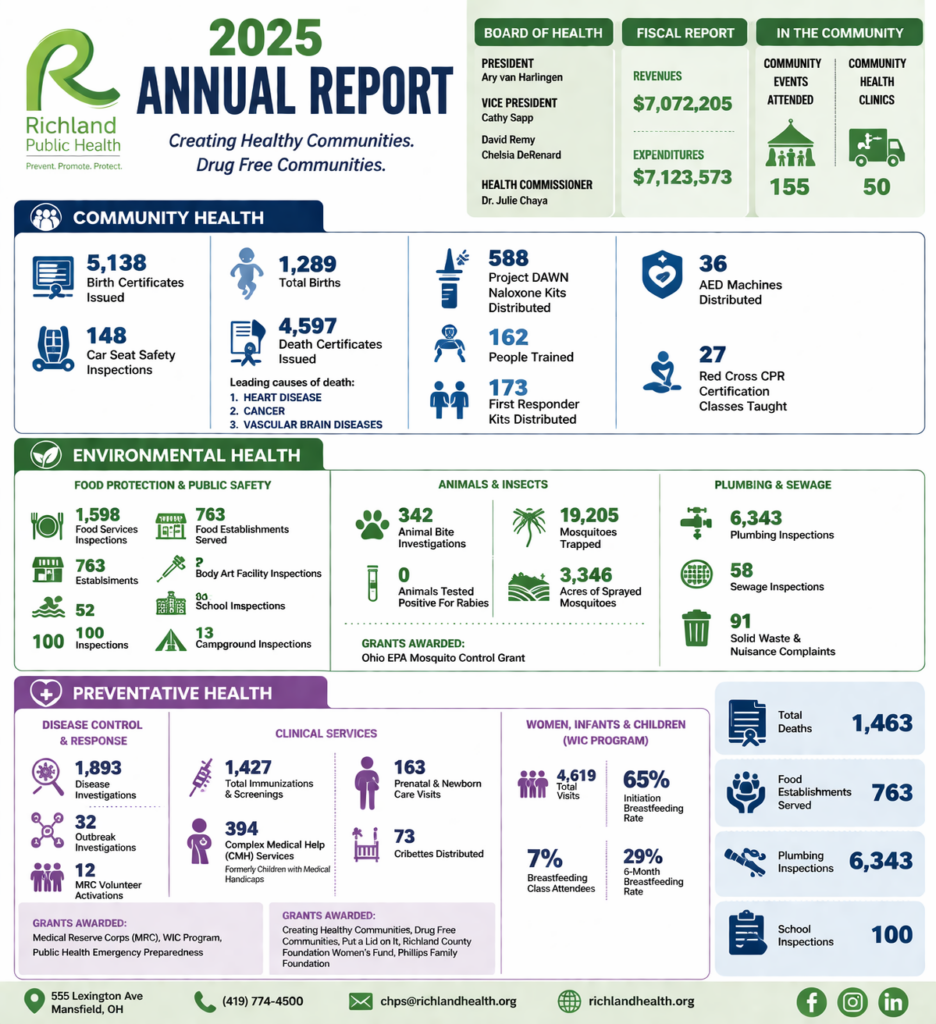
The 2025 Annual Report from Richland Public Health offers that perspective. It is less a document than a snapshot of a system constantly in motion, touching nearly every corner of daily life.
The Daily Work Behind the Scenes
In 2025, there were 1,598 food service inspections and oversight of 763 food establishments. Pools, schools, campgrounds, and body art facilities all received attention. Even plumbing and sewage systems—often overlooked until something goes wrong—accounted for more than 6,300 inspections.
These are not headline-grabbing numbers, but they form the backbone of public safety. Each inspection represents a moment where a potential issue was prevented rather than reacted to.
Health Measured in Human Terms
Beyond infrastructure, the report reflects the human side of health. Richland Public Health issued 5,138 birth certificates and recorded 1,289 total births. At the same time, 4,597 death certificates were processed, with heart disease, cancer, and vascular brain diseases leading the causes of death.
Between those two endpoints—birth and death—the agency’s reach is extensive. There were 1,427 immunizations and screenings, 394 complex medical assistance cases, and 163 prenatal and newborn care visits.
Responding to Crisis, Preventing the Next One
Public health also lives in moments of urgency.
Urgent moments were also represented. There were 1,893 disease investigations and 32 outbreak investigations in 2025. Each represents a potential disruption contained, a chain of transmission interrupted.
At the same time, the ongoing response to the opioid crisis remained visible. The distribution of 588 naloxone kits and training for 162 individuals highlights a strategy focused on immediate intervention and community readiness. This dual role—responding while preparing—is central to modern public health.
A Presence Across the Community
The agency was active outside of clinics and offices as staff attended 155 community events and operated 50 community health clinics. More than 19,000 mosquitoes were trapped as part of environmental monitoring, and over 3,300 acres were sprayed to reduce risk. Even smaller programs carry weight. Car seat safety inspections reached 148 families. AED machines were distributed. CPR classes were taught.
Supporting Families from the Start
The WIC program recorded 4,619 visits, with a breastfeeding initiation rate of 65%. Programs distributed cribettes, provided education, and connected families to resources. These are long-term investments. The impact is not immediate, but it compounds over time in healthier children and stronger households.
The Financial Framework
The agency reported $7,072,205 in revenue against $7,123,573 in expenditures. The near parity reflects a system operating at scale, where resources are continuously translated into services. Grants—from programs such as Medical Reserve Corps, Public Health Emergency Preparedness, and local foundations—play a critical role in sustaining that work.
The Quiet Infrastructure of Health
Taken together, the report reveals something easy to overlook: public health is not a single service but an interconnected system. It inspects restaurants and investigates disease. It supports new parents and trains first responders. It monitors mosquitoes and distributes life-saving medication. Most of the time, it operates without attention. But the numbers from 2025 make clear just how much is happening, every day, to keep a community functioning safely.